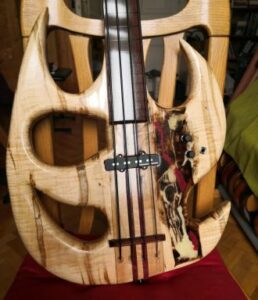
Blues Bubbles 1
Ambrosia maple is not a distinct species of maple; describes a fungal discoloration caused by wood-boring ambrosia beetles. They bore into the trunk of the tree, bringing with them the ambrosia fungi, which subsequently stains and discolors the surrounding wood. The discoloration can be very similar to spalted maple, though with ambrosia maple, the discoloration is centered around the boring paths of the beetles, and their entrance holes can usually be seen.
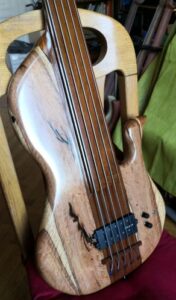
Don Oliviano
Because of the fruit’s economic importance, healthy, cultivated Olive trees aren’t felled for lumber; availability is generally limited to pruned branches, trimmings, and diseased/storm damaged orchard trees and prices are very high. Common uses for High-end furniture, veneer, turned objects, and small specialty wood items.
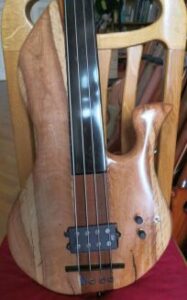
Donna Olivia
Because of the fruit’s economic importance, healthy, cultivated Olive trees aren’t felled for lumber; availability is generally limited to pruned branches, trimmings, and diseased/storm damaged orchard trees and prices are very high. Common uses for High-end furniture, veneer, turned objects, and small specialty wood items.
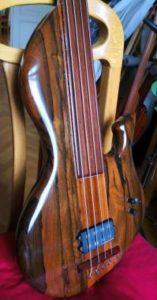
Hot chocolate
Ziricote has a very unique appearance, which is sometimes referred to as “spider-webbing” or “landscape” grain figure. Likely to be quite expensive, exceeding the price of rosewoods, and approaching the cost of some types of ebony.
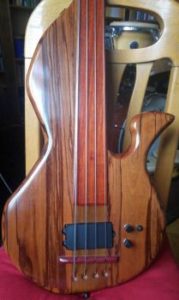
Dark Marble
It´s difficult to work on account of its high density. It´s hard ´n heavy! The high contrast between the golden body and the much darker streaks give it an appearance somewhat similar to natural marble. It’s overall appearance is very similar to Zebrawood, though Marblewood tends to have a finer texture.
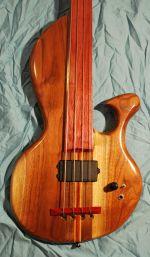
Walnut_Dee
Walnut has cooperative working characteristics, coupled with its rich brown coloration puts the wood in a class by itself among temperate-zone hardwoods. To cap it off, the wood also has good dimensional stability, shock resistance, and strength properties.